Tuesday, August 24, 2010

Update on Bikes for Malawi TB Program

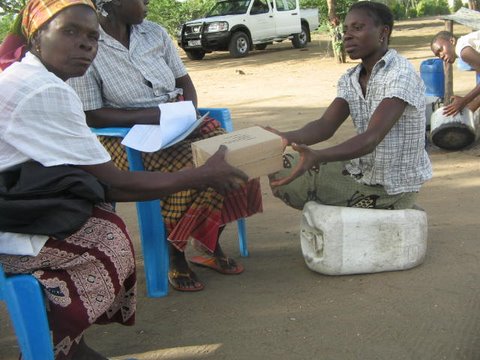
I wanted to provide an update in regards to raising funds for volunteer bicycles to support our TB program in Malawi. The amount we have raised to date was enough to purchase 16 bicycles and 32 spare tires and 32 spare hubs for replacement.

We at
Project HOPE and the people of Malawi are very, very grateful for this donation which will help improve the lives of our poor brothers and sisters in the rural communities. It is no small gift to us but one that carries the giving hearts of the people of America. I want to thank those who donated to the Bikes for Malawi campaign and ask you to rejoice with us that the work of the many people who have volunteered to serve others for no pay is going to be a lot easier. This will motivate them and encourage them a little more.

Read More about our community volunteers at work.

We are very grateful for your personal involvement and the time and energy you invested in this activity. Once again thank you and may God Bless you.

Regards,

Rodrick Nalikungwi, Country Director
Project HOPE Malawi


The goal of the Bikes for Malawi campaign is 60 bikes total, one for each village TB testing site in Malawi. Please consider donating today to help provide this invaluable resource to all of our village testing sites. The bikes, along with spare parts are $168.00 each. Can you help us raise enough money for 44 more bikes? Every donation counts.

Friday, August 13, 2010

New Program in Mozambique Helps Vulnerable Households

Chokwe is a district about 230 kilometers north of Mozambique's capital city of Maputo. The Chokwe district is a rural area with a population of about 62,000 people. Most of the residents live off of the land as subsistence farmers.

Chokwe is known for producing amazing tomatoes as well as other vegetables due to excellent soil and an irrigation system that was put in years ago, and is now being rehabilitated to cover 33,000 Hectacres that will be completed in 2013.

In 2000 Chokwe was completely devastated during catastrophic floods, but over the last few years, the district has managed to rebuild itself. Chokwe is also a hub for migration to South Africa, and when you go there you notice a lack of middle aged men as most of them are in South Africa working in the mining sector.

HOPE's new program in Chokwe will target 1,000 vulnerable households with opportunities to participate in our Village Savings and Loans(VSL) program as well as receive comprehensive health education. In addition, Project HOPE will be partnering with a local organisation to help provide education on how to improve agricultural output and access to markets to sell excess produce. Project HOPE will also be providing training to local NGOS on how to run successful VSL groups in the future, thus building their capacity.

Now, let me introduce you to our staff who will be running the project:

Valente Langa – District Supervisor
Valente was born in Manjacazi in Gaza Province 1958. He is married with 3 children – 2 boys and 1 girl. He lives in Chokwe and has been working for Project HOPE for 4 years. Before this he was working for ORAM – Rural association that helps a lot which is a local community based organization that helps communities in agriculture for example how to create vegetable gardens, how to legalise land etc.

Hortencia Laurindo – Village Savings Loan Promoter
Hortencia was born in Manjacazi in Gaza Province 1969. She is widowed with 5 children-4 girls and 1 boy. She lives in Chokwe and has been working for Project HOPE for 4 years. Before this she worked for Kulima, Benaterras, Quimgera which is a company that sells chemicals.

Zaida Muchanga – Village Savings Loan Promoter
Zaida was born in Tete Province 1981. She is married with 1 boy. She lives in Chokwe and has been working for Project HOPE for 5 years. She used to work for FDM which is another microcredit organization based in Maputo.

Aissa Abdul Gany – Administrative Assistant
Aissa was born in 1989 in Quelimane and is one of 9 children. She currently lives in Maputo and has been working for Project HOPE since 2008 first in our Milange office as our district accountant, then in Maputo as our admin assistant.


Daniel Chaluco – Driver
Daniel was born in Chibuto in 1961. He is married with 7 boys. He has been working for Project HOPE for 5 years. Before this he worked for MODEFA for 3 years. This was a community based organization working on home based care projects for people living with HIV/AIDS.

Thanks for reading -Stefan

Support Project HOPE programs in Mozambique and around the world.

Thursday, June 10, 2010

Distributing Health Kits to the Most Vulnerable

In continuing with our relationship with Population Services International (PSI) Project HOPE is in the process of distributing 6,000 “Health Kits” to caregivers of its most vulnerable children in the Zambezia and Gaza Provinces of Mozambique.

Each kit is made up of a basic health manual, bottles of certeza to purify water, hand soap to wash with and more. Project HOPE has been distributing these kits through its large network of volunteer health educators.

Not only are the kits distributed, but the volunteers sit down with the caregivers and go through the kit explaining how to use everything, and providing basic high quality health education to the caregivers.

These kits will help provide needed training and protection from water borne diseases for the children and help protect caregivers from HIV and AIDS if used correctly.

Thanks for reading -Stefan

Tuesday, May 25, 2010

Community Volunteers Provide Important Health Education

As part of our work with vulnerable children, Project HOPE has worked over the past five years to create a network of volunteer health educators. The educators teach in their own communities, offering important health lessons covering a variety of topics such as how to purify water, washing hands, preventing malaria, HIV and TB.

One of our biggest challenges has been how to overcome the low levels of education in the communities we work with, in particular extremely high illiteracy rates. To overcome this, Project HOPE staff designed a flip chart workbook that uses a series of 30 pictures to present different health messages. On the back of each picture are some discussion questions that the facilitator uses to help cover the important points.

This last week, our health educator in Quelimane, Zambezia was able to train all our volunteers on how to use the flipchart. At the end of the 3 days of training, each volunteer received their own copy of the flipchart to take back to their homes and villages to help teach their neighbors. They also received a Project HOPE T-shirt and cap.

What’s great about using volunteers is that even when the program comes to an end, the volunteers will continue to work in their own communities, teaching their peers how to live healthier lives.

Thanks for Reading
-Stefan

Tuesday, April 20, 2010

Helping the Elderly Care for the Young

Project HOPE in Mozambique not only wants to implement excellent programs, it also wants to help others do the same. We believe that in the longer term, it is better that Mozambicans learn the necessary skills to help themselves, rather than them relying on a foreign NGO for help.

As part of our OVC program, Project HOPE gave out grants to local community-based organisations who had a desire to help vulnerable children in the area. One such group was called APOSEMO. They are an association of retired persons, and they approached Project HOPE in Chokwe, Gaza Province with an idea to raise and sell chickens.


Project HOPE helped them put a business plan together, and it was decided that the profits of the first 5 cycles would go directly to helping vulnerable children in the area. An Avery was built and young chicks purchased. They are fed and vaccinated and about 4-6 weeks later they are sold.

APOSEMO now has a viable long-term income generating project going thanks to the help of Project HOPE, not only helping to employ some elderly folk from Chokwe, but also providing necessary income for vulnerable children in the town too.

Thursday, March 18, 2010

A Day in the Life of a Community Volunteer in Malawi

Saidi Nakhumwa is 47 years old. He lives near Mulanje and serves as a volunteer at the Matipwiri Community Sputum Collection Point site where he carefully collects sputum samples from people who might have TB in surrounding villages and delivers the samples to a TB microscopy laboratory site for testing.

Without a car, or even a bike for transportation, it takes him all day to walk the samples to the nearest TB laboratory and return home. Rodrick Nalikungwi, Project HOPE 's TB Program Manager in Malawi asked Saidi to describe his work as a TB volunteer. Here are Saidi's words:


“I wake up at 5:00 a.m. when it’s my turn to man the Community Sputum Collection Point. It takes me 30 minutes to walk to the Collection Point so I leave home at 6:30 a.m. While at the Collection Point, I wait for other volunteers from 10 other villages to bring sputum samples. I record what I receive in the registers and label the samples. At 10:00 a.m. it is time to take the collected sputum bottles to Chonde Health Center. I walk with another community volunteer and we arrive there around 1:30 p.m.

I hand over all the sputum samples to the Health Surveillance Assistant microscopist at the health centre and sign for what I have given in. Then we start walking back home. Usually we buy sugar cane to suck as we walk back home.

I love serving the community but walking on an empty stomach especially during this lean period, makes me feel tired when I arrive home.”

Later, Rodrick said that Saidi borrowed a bicycle and tied his sputum sample transportation box to the bike. "This is what would help us very much, " Saidi said, while doing a demonstration ride.


Volunteers like Saidi are the cornerstone of Project HOPE’s TB management and treatment programs in Malawi. Can you help? DONATE NOW to help provide bicycle transportation for community volunteers in Malawi.


Thursday, March 11, 2010

Distribution of Mosquito Nets and Certeza to Children in Mozambique

As part of Project HOPE's work with Orphan and Vulnerable Children (OVC), we established a relationship with Population Services International (PSI) – another leading international health NGO that works in the country. Through our relationship with PSI we were able to procure Mosquito nets and bottles of Certeza which purifies unclean water and distribute these to the OVC in our program. One of the leading causes of death in the country of young children is Malaria and waterborne diseases such as diarrhoea.


An example of this occurred last week when working through our network of partners, over 250 nets and bottles of Certeza were given out to children that live in Namuniho which is on the outskirts of Quelimane in Zambezia Province. The children attend a school set up to provide education to 5-15 year olds that have fallen through cracks in the education system and are playing catch up with their more advantaged peers.

Present at the handover ceremony was a representative from the Provincial Ministry of Health who spoke about the importance on using the nets and how to use Certeza.

Thanks to PSI and generous donors like you, these children are now able to drink safe water, and sleep under a net that will help protect them from getting malaria.

Thanks for Reading
-Stefan