
Check out our newest video from one of Project HOPE's Village Savings and Loans (VSL) groups in Guija District, Mozambique. Our VSL programs not only incorporate savings techniques but lifesaving health education. In this video, HOPE staff is conducting health pre-tests to determine the groups’ level of understanding around certain health topics. HOPE then takes this information and tailors our health education program around the results. Towards the end of the project, we will conduct a post test and compare the results. This encourages the groups as they can see where they have improved, and also helps Project HOPE in showing us how effective we have been in our training and what we need to do to improve it.
Thanks for visiting -Stefan
Support Project HOPE programs in Mozambique and around the world.
Showing posts with label Mozambique. Show all posts
Showing posts with label Mozambique. Show all posts
Thursday, November 4, 2010


Friday, October 15, 2010
Village Savings and Loans Groups In Action
Check out our video from my recent visit to one of Project HOPE's Village Savings and Loans groups in Guija District, Mozambique. It is so inspiring to watch the VSL groups master the savings techniques that HOPE has taught them. Everybody was excited about putting a little bit of money away each week knowing that it was safe and that it would benefit them at the end of the year when all the money is divided up.
Thanks for visiting and please check back soon for another video from the Guija District VSL group. -Stefan
Support Project HOPE programs in Mozambique and around the world.
Thanks for visiting and please check back soon for another video from the Guija District VSL group. -Stefan
Support Project HOPE programs in Mozambique and around the world.
Monday, October 4, 2010
Visiting our VSL groups in Guija District - Mozambique
 A couple of weeks ago I was able to head out into the bush with our staff to visit our Village Savings and Loans groups in Guija District, Mozambique. This was a really neat experience for me firstly because I have never been to Guija before, and secondly I was anxious to see how our new project was getting on and if it was making the impact that we believed it would when we designed it.
 Driving into meet one of the groups you realise how far away you are from anything – town, tar road, shops etc. These people live off the land and off remittances that are sent from family members working in South Africa. The thing you notice right away is that there are not too many men around the place. This is because the majority are working legally or illegally in South Africa.
Life for these women consists of getting up early each morning and fetching water at a well which also serves as a meeting point to chat with friends and neighbours. Then its back to prepare some breakfast and off to the fields to tend to crops.
 Guija, unlike neighbouring Chokwe is not as fertile and so its much harder to produce enough food to eat. The afternoons are spent around the house, looking after the children, maybe collecting some firewood and attending VSL group meetings before cooking dinner and going to bed.
 It was wonderful to sit with some of our VSL groups and watch them master the savings techniques that Project HOPE has taught them. Everybody was excited about putting a little bit of money away each week knowing that it was safe and that it would benefit them at the end of the year when all the money is divided up.
Another reason for my trip was to conduct some health pre-tests. Basically this involves asking a set of questions to each group to determine their level of understanding around certain health topics.
 Project HOPE then takes this information and is able to use it to highlight certain areas that need improving. We tailor our health education and then towards the end of the project we will conduct a post test which is the same set of questions and compare the results. This then encourages the groups as they can see where they have improved, and also helps Project HOPE in showing us how effective we have been in our training and what we need to do to improve it.
Check back for some videos from my visit in the coming days!
Friday, August 13, 2010
New Program in Mozambique Helps Vulnerable Households
 Chokwe is a district about 230 kilometers north of Mozambique's capital city of Maputo. The Chokwe district is a rural area with a population of about 62,000 people. Most of the residents live off of the land as subsistence farmers.
Chokwe is known for producing amazing tomatoes as well as other vegetables due to excellent soil and an irrigation system that was put in years ago, and is now being rehabilitated to cover 33,000 Hectacres that will be completed in 2013.
In 2000 Chokwe was completely devastated during catastrophic floods, but over the last few years, the district has managed to rebuild itself. Chokwe is also a hub for migration to South Africa, and when you go there you notice a lack of middle aged men as most of them are in South Africa working in the mining sector.
 HOPE's new program in Chokwe will target 1,000 vulnerable households with opportunities to participate in our Village Savings and Loans(VSL) program as well as receive comprehensive health education. In addition, Project HOPE will be partnering with a local organisation to help provide education on how to improve agricultural output and access to markets to sell excess produce. Project HOPE will also be providing training to local NGOS on how to run successful VSL groups in the future, thus building their capacity.
Now, let me introduce you to our staff who will be running the project:
 Valente Langa – District Supervisor
 Valente was born in Manjacazi in Gaza Province 1958. He is married with 3 children – 2 boys and 1 girl. He lives in Chokwe and has been working for Project HOPE for 4 years. Before this he was working for ORAM – Rural association that helps a lot which is a local community based organization that helps communities in agriculture for example how to create vegetable gardens, how to legalise land etc.
 Hortencia Laurindo – Village Savings Loan Promoter
Hortencia was born in Manjacazi in Gaza Province 1969. She is widowed with 5 children-4 girls and 1 boy. She lives in Chokwe and has been working for Project HOPE for 4 years. Before this she worked for Kulima, Benaterras, Quimgera which is a company that sells chemicals.
 Zaida Muchanga – Village Savings Loan Promoter
Zaida was born in Tete Province 1981. She is married with 1 boy. She lives in Chokwe and has been working for Project HOPE for 5 years. She used to work for FDM which is another microcredit organization based in Maputo.
 Aissa Abdul Gany – Administrative Assistant
Aissa was born in 1989 in Quelimane and is one of 9 children. She currently lives in Maputo and has been working for Project HOPE since 2008 first in our Milange office as our district accountant, then in Maputo as our admin assistant.
 Daniel Chaluco – Driver
Daniel was born in Chibuto in 1961. He is married with 7 boys. He has been working for Project HOPE for 5 years. Before this he worked for MODEFA for 3 years. This was a community based organization working on home based care projects for people living with HIV/AIDS.
Thanks for reading -Stefan
Support Project HOPE programs in Mozambique and around the world.
 Aissa Abdul Gany – Administrative Assistant
Aissa was born in 1989 in Quelimane and is one of 9 children. She currently lives in Maputo and has been working for Project HOPE since 2008 first in our Milange office as our district accountant, then in Maputo as our admin assistant.
 Daniel Chaluco – Driver
Daniel was born in Chibuto in 1961. He is married with 7 boys. He has been working for Project HOPE for 5 years. Before this he worked for MODEFA for 3 years. This was a community based organization working on home based care projects for people living with HIV/AIDS.
Thanks for reading -Stefan
Support Project HOPE programs in Mozambique and around the world.
Thursday, June 10, 2010
Distributing Health Kits to the Most Vulnerable
 In continuing with our relationship with Population Services International (PSI) Project HOPE is in the process of distributing 6,000 “Health Kits” to caregivers of its most vulnerable children in the Zambezia and Gaza Provinces of Mozambique.
Each kit is made up of a basic health manual, bottles of certeza to purify water, hand soap to wash with and more. Project HOPE has been distributing these kits through its large network of volunteer health educators.
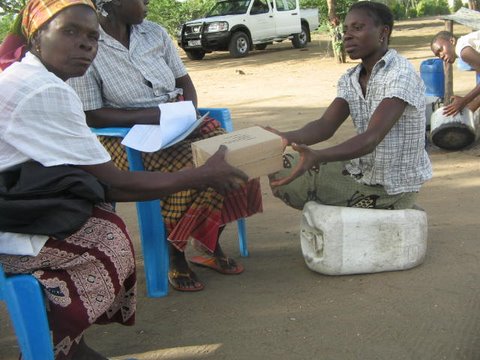
Not only are the kits distributed, but the volunteers sit down with the caregivers and go through the kit explaining how to use everything, and providing basic high quality health education to the caregivers.
 These kits will help provide needed training and protection from water borne diseases for the children and help protect caregivers from HIV and AIDS if used correctly.
Thanks for reading -Stefan
Tuesday, May 25, 2010
Community Volunteers Provide Important Health Education
As part of our work with vulnerable children, Project HOPE has worked over the past five years to create a network of volunteer health educators. The educators teach in their own communities, offering important health lessons covering a variety of topics such as how to purify water, washing hands, preventing malaria, HIV and TB.
One of our biggest challenges has been how to overcome the low levels of education in the communities we work with, in particular extremely high illiteracy rates. To overcome this, Project HOPE staff designed a flip chart workbook that uses a series of 30 pictures to present different health messages. On the back of each picture are some discussion questions that the facilitator uses to help cover the important points.
 This last week, our health educator in Quelimane, Zambezia was able to train all our volunteers on how to use the flipchart. At the end of the 3 days of training, each volunteer received their own copy of the flipchart to take back to their homes and villages to help teach their neighbors. They also received a Project HOPE T-shirt and cap.
What’s great about using volunteers is that even when the program comes to an end, the volunteers will continue to work in their own communities, teaching their peers how to live healthier lives.
Thanks for Reading
-Stefan
One of our biggest challenges has been how to overcome the low levels of education in the communities we work with, in particular extremely high illiteracy rates. To overcome this, Project HOPE staff designed a flip chart workbook that uses a series of 30 pictures to present different health messages. On the back of each picture are some discussion questions that the facilitator uses to help cover the important points.
 This last week, our health educator in Quelimane, Zambezia was able to train all our volunteers on how to use the flipchart. At the end of the 3 days of training, each volunteer received their own copy of the flipchart to take back to their homes and villages to help teach their neighbors. They also received a Project HOPE T-shirt and cap.
What’s great about using volunteers is that even when the program comes to an end, the volunteers will continue to work in their own communities, teaching their peers how to live healthier lives.
Thanks for Reading
-Stefan
Tuesday, April 20, 2010
Helping the Elderly Care for the Young
Project HOPE in Mozambique not only wants to implement excellent programs, it also wants to help others do the same. We believe that in the longer term, it is better that Mozambicans learn the necessary skills to help themselves, rather than them relying on a foreign NGO for help.
 As part of our OVC program, Project HOPE gave out grants to local community-based organisations who had a desire to help vulnerable children in the area. One such group was called APOSEMO. They are an association of retired persons, and they approached Project HOPE in Chokwe, Gaza Province with an idea to raise and sell chickens.
 Project HOPE helped them put a business plan together, and it was decided that the profits of the first 5 cycles would go directly to helping vulnerable children in the area. An Avery was built and young chicks purchased. They are fed and vaccinated and about 4-6 weeks later they are sold.
APOSEMO now has a viable long-term income generating project going thanks to the help of Project HOPE, not only helping to employ some elderly folk from Chokwe, but also providing necessary income for vulnerable children in the town too.
 As part of our OVC program, Project HOPE gave out grants to local community-based organisations who had a desire to help vulnerable children in the area. One such group was called APOSEMO. They are an association of retired persons, and they approached Project HOPE in Chokwe, Gaza Province with an idea to raise and sell chickens.
 Project HOPE helped them put a business plan together, and it was decided that the profits of the first 5 cycles would go directly to helping vulnerable children in the area. An Avery was built and young chicks purchased. They are fed and vaccinated and about 4-6 weeks later they are sold.
APOSEMO now has a viable long-term income generating project going thanks to the help of Project HOPE, not only helping to employ some elderly folk from Chokwe, but also providing necessary income for vulnerable children in the town too.
Thursday, March 11, 2010
Distribution of Mosquito Nets and Certeza to Children in Mozambique
 As part of Project HOPE's work with Orphan and Vulnerable Children (OVC), we established a relationship with Population Services International (PSI) – another leading international health NGO that works in the country. Through our relationship with PSI we were able to procure Mosquito nets and bottles of Certeza which purifies unclean water and distribute these to the OVC in our program. One of the leading causes of death in the country of young children is Malaria and waterborne diseases such as diarrhoea.
 An example of this occurred last week when working through our network of partners, over 250 nets and bottles of Certeza were given out to children that live in Namuniho which is on the outskirts of Quelimane in Zambezia Province. The children attend a school set up to provide education to 5-15 year olds that have fallen through cracks in the education system and are playing catch up with their more advantaged peers.
 Present at the handover ceremony was a representative from the Provincial Ministry of Health who spoke about the importance on using the nets and how to use Certeza.
Thanks to PSI and generous donors like you, these children are now able to drink safe water, and sleep under a net that will help protect them from getting malaria.
Thanks for Reading
-Stefan
Thursday, March 4, 2010
With a Little HOPE, VSL Group Thrives
In Zambezia Province of Mozambique, Project HOPE has been running the savings and loans mobilisation program for quite a while. Over the life of the project we have had over 300 groups that have been formed and trained in the methodology.
One of these groups is called “Esperança” which means “Hope” in Portuguese. This group is based on the outskirts of Mocuba and they have been with Project HOPE since almost the beginning of the project, but now function very independently. To date they are continuing to save money on a regular basis and give out loans to members of the group. As a result of working with us, they decided to form an “association” which is a legally registered body of people with the government that has a constitution and board. By doing this they are better able to access help from other NGOs and even government funds.
 Each of the members of the group owns at least 1 hectare of land on which they produce corn, peanuts and other vegetables. The group’s idea was to try to access markets in Mocuba and sell surplus product there, thus generating income. One of the biggest challenges to this is knowing what to do with the food once it is harvested, and so the group had the idea of together building a storehouse where produce could be stored in a safe location until either they could arrange transport to get the produce to town, or even better, have a buyer come and pick it up from them.
To help them in time for this current harvest season, Project HOPE, through its generous donors was able to supplement what the group had already saved up and donated $800.00 to complete the construction of this storehouse.
Thanks for Reading
-Stefan
One of these groups is called “Esperança” which means “Hope” in Portuguese. This group is based on the outskirts of Mocuba and they have been with Project HOPE since almost the beginning of the project, but now function very independently. To date they are continuing to save money on a regular basis and give out loans to members of the group. As a result of working with us, they decided to form an “association” which is a legally registered body of people with the government that has a constitution and board. By doing this they are better able to access help from other NGOs and even government funds.
 Each of the members of the group owns at least 1 hectare of land on which they produce corn, peanuts and other vegetables. The group’s idea was to try to access markets in Mocuba and sell surplus product there, thus generating income. One of the biggest challenges to this is knowing what to do with the food once it is harvested, and so the group had the idea of together building a storehouse where produce could be stored in a safe location until either they could arrange transport to get the produce to town, or even better, have a buyer come and pick it up from them.
To help them in time for this current harvest season, Project HOPE, through its generous donors was able to supplement what the group had already saved up and donated $800.00 to complete the construction of this storehouse.
Thanks for Reading
-Stefan
Friday, February 26, 2010
New Village Savings and Loans Program for Mozambique
Gaza Province, Mozambique
 In January, I was able to travel to Xai Xai which is the Provincial capital of Gaza Province in Mozambique to our office there and train some of our staff on Village Savings and Loans (VSL)methodology. Project HOPE has been working in four districts there– Xai Xai, Chibuto, Chokwe and Guija through our USAID funded Orphans and Vulnerable Children(OVC) program where we have formed groups of OVC caregivers and given out loans (microcredit) to help them set up small businesses, expand existing ones etc. We combine these loan programs with health education.
 What we are doing now, is using a different type of economic strengthening approach called savings and loans mobilisation, where groups of OVC caregivers are formed and they save their own money, which becomes a “loan fund” from which members of the group can apply for a small loan repayable back with interest to the group. This is also combined with comprehensive health education, covering topics such as HIV prevention, care and treatment, TB, Malaria, hygiene and sanitation, nutrition, legal rights of a child etc. Groups meet on a weekly basis and essentially support and encourage each other.
These two types of economic strengthening activities will then be compared to see which is more sustainable and effective in the longer-term.
 We trained 11 promoters throughout the week on VSL methodology, how to teach health education and the importance of monitoring and evaluation, specifically how to conduct the crucial surveys that we do to measure the success of our project. We also included training on the history and work of Project HOPE around the world.
For me it was a good opportunity to get to know the staff better, try to understand some of the issues that they face in working in these difficult environments, and then try together to help problem solve. This was the first time that I have taught in Portuguese for about four years so each night I was exhausted, but the group told me I was understandable so that was good!
 Xai Xai is also known for its beautiful beach, so after each day’s lessons we were all able to relax and enjoy each other’s company on the beach or watching the “Mambas” – Mozambique’s national soccer team play in the African Cup of Nations that was taking place then!
I am confident that over the next 6 months as this project gets up and running it will make a substantial difference in the people’s lives in the districts where we work. Check back to hear about how its going and to read some interviews from the participants.
Thanks for Reading
-Stefan
 In January, I was able to travel to Xai Xai which is the Provincial capital of Gaza Province in Mozambique to our office there and train some of our staff on Village Savings and Loans (VSL)methodology. Project HOPE has been working in four districts there– Xai Xai, Chibuto, Chokwe and Guija through our USAID funded Orphans and Vulnerable Children(OVC) program where we have formed groups of OVC caregivers and given out loans (microcredit) to help them set up small businesses, expand existing ones etc. We combine these loan programs with health education.
 What we are doing now, is using a different type of economic strengthening approach called savings and loans mobilisation, where groups of OVC caregivers are formed and they save their own money, which becomes a “loan fund” from which members of the group can apply for a small loan repayable back with interest to the group. This is also combined with comprehensive health education, covering topics such as HIV prevention, care and treatment, TB, Malaria, hygiene and sanitation, nutrition, legal rights of a child etc. Groups meet on a weekly basis and essentially support and encourage each other.
These two types of economic strengthening activities will then be compared to see which is more sustainable and effective in the longer-term.
 We trained 11 promoters throughout the week on VSL methodology, how to teach health education and the importance of monitoring and evaluation, specifically how to conduct the crucial surveys that we do to measure the success of our project. We also included training on the history and work of Project HOPE around the world.
For me it was a good opportunity to get to know the staff better, try to understand some of the issues that they face in working in these difficult environments, and then try together to help problem solve. This was the first time that I have taught in Portuguese for about four years so each night I was exhausted, but the group told me I was understandable so that was good!
 Xai Xai is also known for its beautiful beach, so after each day’s lessons we were all able to relax and enjoy each other’s company on the beach or watching the “Mambas” – Mozambique’s national soccer team play in the African Cup of Nations that was taking place then!
I am confident that over the next 6 months as this project gets up and running it will make a substantial difference in the people’s lives in the districts where we work. Check back to hear about how its going and to read some interviews from the participants.
Thanks for Reading
-Stefan
Thursday, February 25, 2010
Welcome to Project HOPE Mozambique
Project HOPE’s history in Mozambique, explaining more about our current programs that we are running, our dreams and visions for the future, and ways in which you can personally get involved. Let me start with a brief introduction:
 Project HOPE first established its presence in Mozambique in 1997. Our head office is situated in the capital city, Maputo, and we have offices in Gaza Province in the south of the country and Zambezia Province in the North. We are currently working in 8 different districts in the two Provinces and have a total staff of 44 persons, of which 42 are of Mozambican nationality.
Over the past 13 years, Project HOPE has been involved in a number of projects from Maternal and Child Health programs, to Workplace HIV Prevention policy formation, to the installation of short wave radio systems in remote health posts aiming to reduce mortality rates through better communication, to Youth HIV Prevention and Economic Strengthening programs. In 2001 the Southern part of the country was extensively damaged during massive floods, to which Project HOPE responded and through generous donors was able to send $5 million of pharmaceutical and medical supplies to help in the relief efforts.
 Currently Project HOPE is undertaking a 5 year USAID funded Orphan and Vulnerable Children’s Program to strengthen families who care for OVC through economic strengthening and health education activities (more to follow in future blogs.)
What does the future hold for Project HOPE here in Mozambique? As a well recognized Public Health NGO, the future looks bright. We have dreams to expand our programmatic focus into a number of new areas, drawing on experience from the Project HOPE worldwide family, as well as breaking ground into new Provinces and Districts where there is still great need in partnership with local and international NGOs as well as with the strong support of the Mozambican government.
Keep checking back for further updates!
-Stefan
 Project HOPE first established its presence in Mozambique in 1997. Our head office is situated in the capital city, Maputo, and we have offices in Gaza Province in the south of the country and Zambezia Province in the North. We are currently working in 8 different districts in the two Provinces and have a total staff of 44 persons, of which 42 are of Mozambican nationality.
Over the past 13 years, Project HOPE has been involved in a number of projects from Maternal and Child Health programs, to Workplace HIV Prevention policy formation, to the installation of short wave radio systems in remote health posts aiming to reduce mortality rates through better communication, to Youth HIV Prevention and Economic Strengthening programs. In 2001 the Southern part of the country was extensively damaged during massive floods, to which Project HOPE responded and through generous donors was able to send $5 million of pharmaceutical and medical supplies to help in the relief efforts.
 Currently Project HOPE is undertaking a 5 year USAID funded Orphan and Vulnerable Children’s Program to strengthen families who care for OVC through economic strengthening and health education activities (more to follow in future blogs.)
What does the future hold for Project HOPE here in Mozambique? As a well recognized Public Health NGO, the future looks bright. We have dreams to expand our programmatic focus into a number of new areas, drawing on experience from the Project HOPE worldwide family, as well as breaking ground into new Provinces and Districts where there is still great need in partnership with local and international NGOs as well as with the strong support of the Mozambican government.
Keep checking back for further updates!
-Stefan
Subscribe to:
Posts (Atom)


 Posts
Posts

